


Crime and Public Safety
by Robert Solanga May 11, 2026
DA, public safety unions decry reputed waste in latest salvo of Santa Clara County spending fight
Coalition calls out what it calls non-essential spending amid austerity measures to close a nearly $800 million budget hole triggered largely by federal funding cuts
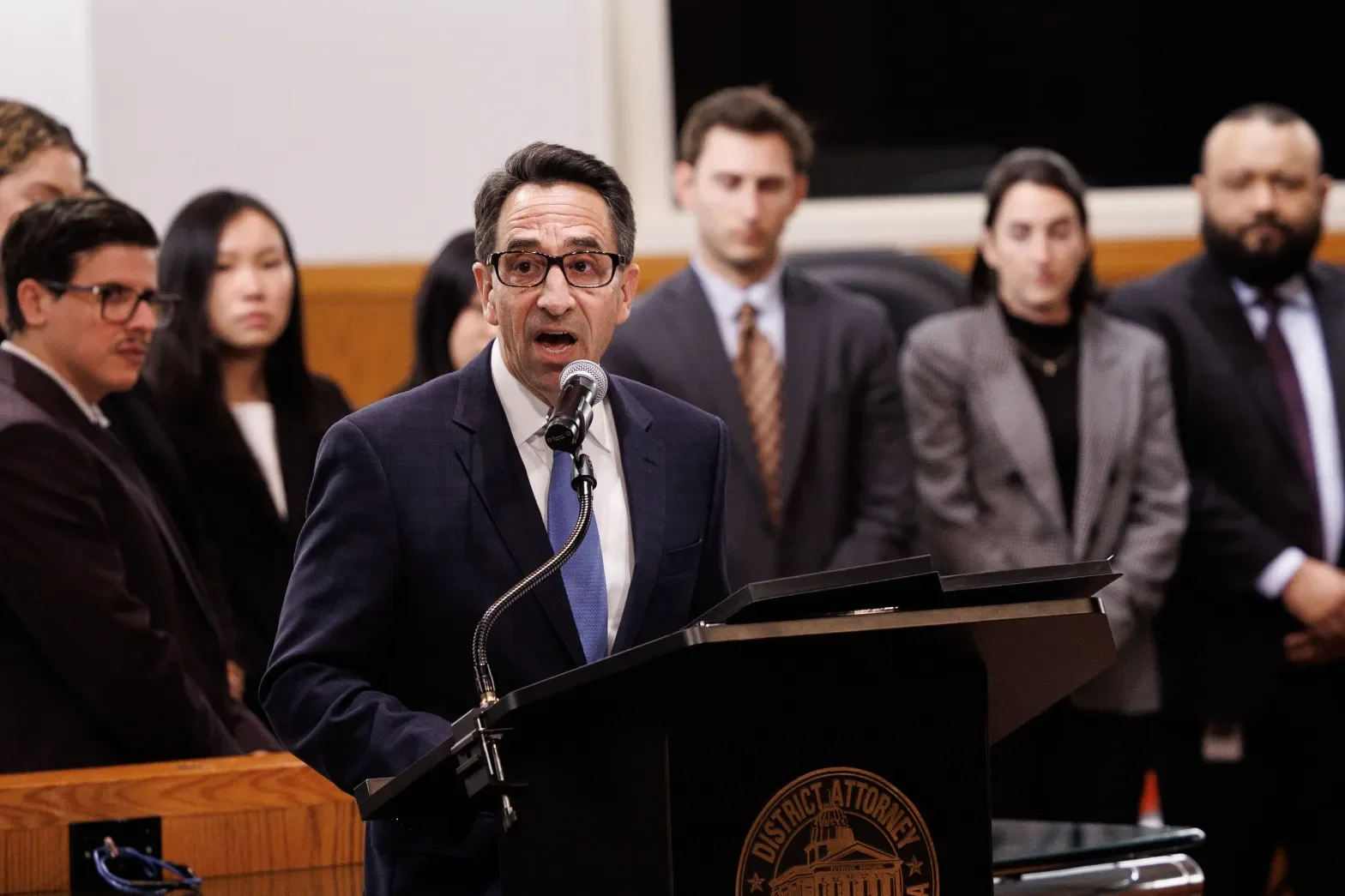
SAN JOSE — A coalition of South Bay public safety unions, banding together with Santa Clara County District Attorney Jeff Rosen, is calling out what they describe as wasteful spending in the latest salvo to preserve law enforcement funding while the county grapples with a nearly $800 million budget deficit.
Much like he did two years ago in response to a similar array of proposed job losses for his office, District Attorney Jeff Rosen said the community could suffer if his office faces heavy losses. The latest possible cuts are blamed on a sharp clawback of federal dollars from the Trump administration.
Max Zarzana, a prosecutor in mental health and drug court who heads the Government Attorneys Association — the union for the county’s line-level prosecutors and public defenders — led a news conference Monday that zeroed in on expenses including executive retreats at Stanford University, and virtual coffee meetings, which are funded by contracts amounting to $4.66 million and $3.2 million respectively.
He said his group only learned about the scope of the under-the-radar contracts as a result of a state law requiring wide public disclosure starting this year, and they moved to publish them after getting an unprecedented detailed view.
“This website is intended to provide … credible options that they can choose instead of the deep and debilitating cuts that are being proposed right now,” Zarzana said.
He also questioned the sensibility of paying millions to hold coffee meetings — as a peer and caregiver support resource — that are held exclusively online.
“I can’t even suggest that we go from a large down to a small because they’re not even serving real coffee,” Zarzana said.
Rosen emphasized that the expenses the coalition outline have merit in times of budget abundance, but in a financial crunch need to make way for law enforcement staffing that keeps crime at bay.
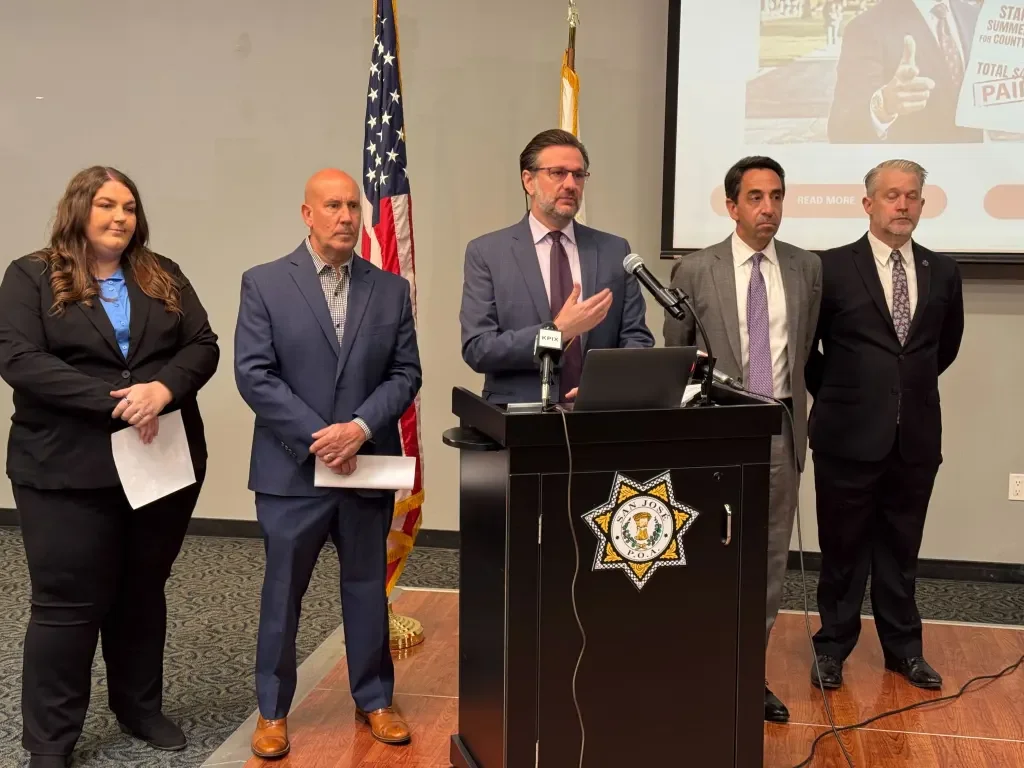
“I think a lot of the things in these contracts are certainly ‘nice to haves,’ are good things, but are they ‘must haves’ like we must have prosecutors, we must have DA detectives, we must have mental health clinicians?” he said.
The county contends that the DA’s office reduction proposals are proportionally less than what many other counties agencies are slated to experience, even as Rosen says his office’s staffing numbers are at a 10-year low. County Executive James Williams pointedly disagreed with the group over the value and necessity of the services and contracts they highlighted.
“(The) DA and his allies are grossly misrepresenting what many of these county contracts actually do. Are they seriously suggesting we stop deep cleaning police cars when people vomit in them? That we abandon mentorship services that help kids escape gang violence?” Williams said in a statement. “Instead of putting forward misinformation about the work of other county departments, we encourage the DA and his allies to focus on the actual budget challenges at hand, which require difficult cuts across the county organization to close a $787 (million) budget deficit.”
The coalition’s actions Monday continue to inflame tensions between county law enforcement and Williams’ administration over Measure A, a tax initiative voters passed last year to buoy the county’s finances in anticipation of $1 billion in cuts to federal Medicaid dollars that subsidize a quarter of the county’s healthcare system.
Rosen and other public-safety figures supported the tax measure under the impression that at minimum, its passage would stave off downstream cuts to their agencies, they said. But after being presented with notable cut proposals even after accounting for the $337 million expected to enter county coffers in a full year, they soured on county leaders, and Rosen vocally complained he was deceived. He would later forewarn public-safety peril as a result of the cuts, which in his office amount to the prospective loss of about 40 positions.
Similarly, Sean Pritchard, former head of the San Jose Police Officers’ Association and now head of the DA Investigators Association, warned of how cuts to his agency would hamper human trafficking enforcement and gun-violence prevention work done in the county.
The county healthcare system — now the state’s second-largest after several hospital acquisitions in the past years — was already in a deficit prior to the federal cuts and has absorbed significant job losses, including a round of cuts this past February. Overall, the current proposed budget entails a loss of 464 county jobs, many of them vacant. Behavioral health services in the county are slated to suffer significantly as well with the proposed cut of 110 positions.
On the latter proposal, Mary Sunzeri, president of the San Jose Police Dispatchers Association, said there is already a resource bottleneck when they want to send a behavioral health specialist or the county-run civilian TRUST team to respond to a mental-health crisis. The city is under pressure from civil rights groups — including the local ACLU chapter and Silicon Valley De-Bug — to boost the civilian response capacity for these scenarios.
“The person in crisis does not need a sheriff deputy or police officer to come out,” Sunzeri said. “What they need is a clinician.”
Zarzana added that jobs like his are most vulnerable when Rosen’s office has to trim his budget, along with their work dedicated to finding non-jail and rehabilitative outcomes for defendants suffering from mental illness and drug addiction.
“What do we think is going to be the first (job) code on the chopping block? It’s not going to be a homicide prosecutor. It’s going to be people like myself who work in mental health drug treatment court,” he said. “What are the priorities of the county?”